Project Title: Primary Health Outreach: Mobile Medical Clinics for Underserved Communities in Sudan
Organization: Oxfam
Project Overview:
In the remote villages and displacement camps of Sudan, illness comes without warning, but healthcare never arrives at all. For families displaced by conflict, scattered across Darfur, Kordofan, White Nile, and beyond, a simple infection can become a death sentence. A child with malaria, a woman in labor, an elderly person with a chronic condition—they all face the same impossible reality: the nearest clinic is days away, if it exists at all .
Sudan's health system has collapsed. Up to 80% of health facilities are non-functional in conflict-affected areas . Millions of people have been displaced, cut off from the care they desperately need. Disease outbreaks are spreading—cholera, measles, malaria, dengue fever—and the most vulnerable are dying from conditions that are completely treatable .
Oxfam has worked in Sudan for decades, delivering humanitarian assistance to those who need it most. With over 30 years of experience in the country, Oxfam is launching the Primary Health Outreach: Mobile Medical Clinics project to bring essential healthcare directly to the doorsteps of Sudan's most underserved communities.
The Crisis: A Health System on the Brink of Collapse
Sudan's health crisis is characterized by multiple intersecting challenges:
| Challenge | Impact |
|---|---|
| Health system collapse | Up to 80% of health facilities non-functional in conflict zones, with facilities destroyed, medical supplies depleted, and health workers displaced or unpaid |
| Mass displacement | Over 11 million people displaced, scattered across remote areas with no access to permanent health facilities |
| Disease outbreaks | Cholera, measles, malaria, dengue fever, and diarrhea spreading through overcrowded camps, claiming lives daily |
| Maternal and child health crisis | Pregnant women face childbirth without medical support; children under five lack vaccinations and basic care |
| Malnutrition and health | Malnourished children are 11 times more likely to die from disease than healthy peers |
| Chronic conditions | Elderly and chronically ill patients lack ongoing treatment and support |
| Health education deficit | Communities lack knowledge of prevention, hygiene, and early treatment-seeking behavior |
The World Health Organization (WHO) has documented the devastating toll: 20,000 suspected cholera cases, 4,000 suspected measles cases, and 9,000 suspected dengue fever cases in recent outbreaks . Children in displacement camps suffer from fever, diarrhea, and respiratory infections in contexts with low vaccination coverage and unsafe water .
Women and girls face particular risks, with limited access to sexual and reproductive health services, family planning, and maternal care . In the camps and transit centers, illnesses like malaria, typhoid, diarrhea, and common cold are widespread . Snake bites add another layer of danger .
Oxfam's Track Record in Sudan
Oxfam has extensive experience implementing successful health and humanitarian programs across Sudan:
| Area | Description |
|---|---|
| Presence in Sudan | Over 30 years of humanitarian and development work |
| Health Programming | Experience in primary healthcare, nutrition, WASH, and disease outbreak response |
| Humanitarian Response | Proven capacity to deliver assistance in conflict-affected and hard-to-reach areas |
| Partnerships | Collaboration with Federal Ministry of Health, State Ministries of Health, WHO, UNICEF, and other health cluster partners |
| Community Engagement | Deep relationships with local communities and understanding of cultural contexts |
Project Components: Mobile Medical Clinics
Oxfam's Primary Health Outreach project deploys a fleet of mobile health clinics to reach remote communities and displacement camps across targeted regions of Sudan. Each mobile clinic is a fully equipped medical unit staffed by trained healthcare workers who travel directly to communities cut off from care.
| Component | Description |
|---|---|
| Mobile Medical Consultations | On-site diagnosis and treatment for common illnesses including malaria, typhoid, diarrhea, respiratory infections, skin conditions, and fever. Mobile teams bring care to patients who cannot travel to health facilities. |
| Essential Medicines and Supplies | Distribution of life-saving medications, treatments, and basic medical supplies at no cost to patients. Each clinic carries a stock of essential drugs to treat the most common conditions affecting displaced populations. |
| Maternal and Child Health Services | Prenatal care, safe delivery support, postnatal care, vaccinations, and nutrition screening for children under five. Pregnant women receive critical check-ups and referrals for complicated cases. |
| Sexual and Reproductive Health | Family planning services, reproductive health education, and support for women and adolescent girls, provided in safe, confidential settings. |
| Vaccination Services | Administration of life-saving vaccines to children and adults, contributing to outbreak prevention and control. Mobile clinics coordinate with national immunization campaigns to reach zero-dose children. |
| Malnutrition Screening and Referral | Mid-Upper Arm Circumference (MUAC) screening to identify malnourished children, with referral to therapeutic feeding programs for those requiring intensive treatment. |
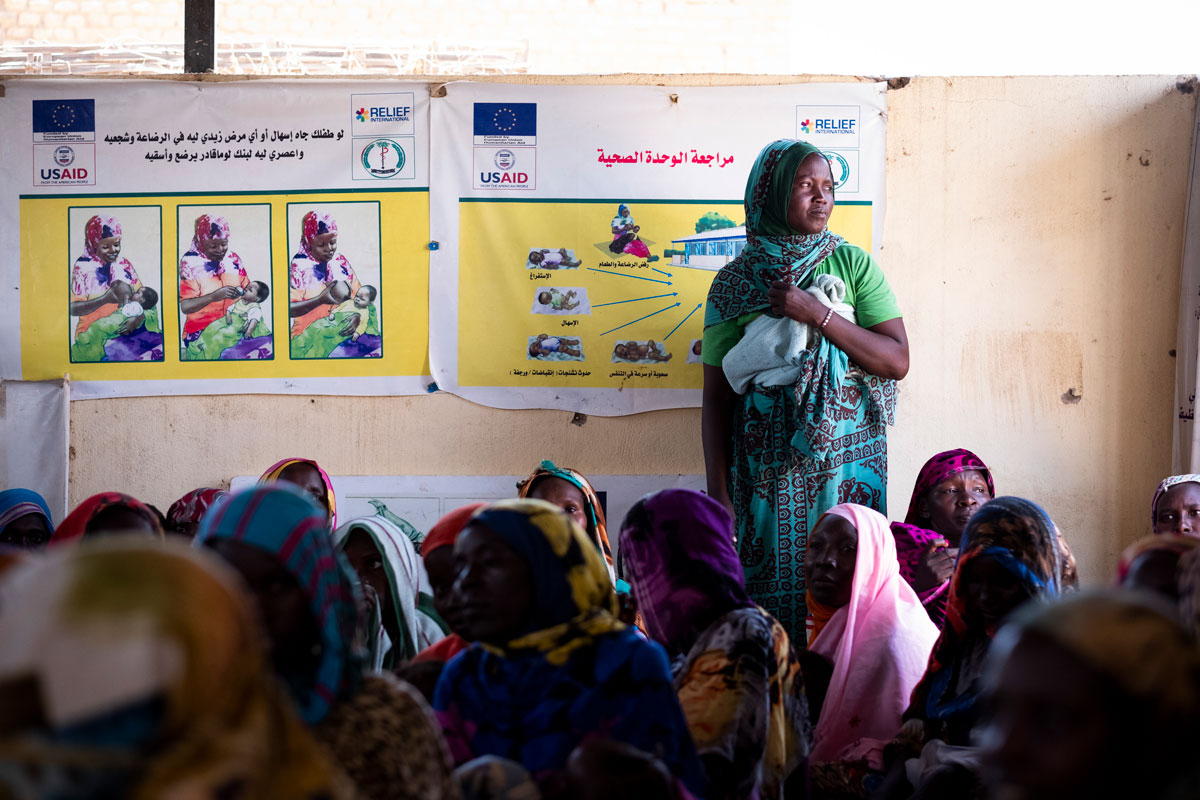
| Health Education and Promotion | Community sessions on disease prevention, hygiene practices, nutrition, breastfeeding, family planning, and when to seek care. Education empowers communities to protect their own health. |
| Disease Surveillance and Early Warning | Monitoring of disease trends in target communities, enabling early detection of outbreaks and rapid response. |
| Referral System | Connection to fixed health facilities for patients requiring advanced or specialized care, including stabilization centers for severely malnourished children and hospitals for complicated deliveries. |
| Training and Support | Capacity building for community health workers and local service providers, creating lasting impact beyond individual clinic visits. |
Target Beneficiaries
Priority populations include:
Internally displaced persons (IDPs) in camps and informal settlements
Host communities with no access to permanent health facilities
Refugees fleeing conflict into Sudan
Women, particularly pregnant and lactating women, and adolescent girls
Children under five suffering from malnutrition and preventable diseases
Elderly individuals and persons with chronic illnesses or disabilities
Widows and female-headed households with limited support
Geographic Focus
Based on needs assessments and Oxfam's existing presence, initial deployment will target:
Darfur states (North, South, Central, West Darfur) where conflict has severely disrupted health services and malnutrition has reached catastrophic levels
Kordofan states (North and South Kordofan) with significant displaced populations and limited health access
White Nile state, hosting large displaced populations and refugee communities
Khartoum state and other urban areas where displaced families have sought shelter but lack access to care
Al Jazirah, River Nile, Blue Nile, and Northern states affected by flooding and displacement
Hard-to-reach areas identified through ongoing humanitarian coordination where no other health providers operate
Expected Outcomes
Reduced mortality and morbidity among conflict-affected and displaced populations
Improved health and wellbeing for displaced communities and host populations through access to quality primary healthcare
Enhanced dignity and access to healthcare for women, children, and vulnerable groups
Increased vaccination coverage and reduced incidence of vaccine-preventable diseases
Early detection and treatment of malnutrition preventing deterioration to severe states
Strengthened community health knowledge and prevention practices
Improved maternal and child health outcomes through prenatal care, safe delivery support, and postnatal follow-up
Reduced disease outbreaks through surveillance, early warning, and rapid response
Support for local health workers through training and capacity building
Partnership and Coordination
Oxfam will coordinate closely with:
Federal Ministry of Health and State Ministries of Health
World Health Organization (WHO)
UNICEF
Health Cluster partners
Other humanitarian organizations operating in target areas
Community-based organizations and local health committees
This coordination ensures alignment with national protocols, avoids duplication, and maximizes the impact of every health intervention .
Sustainability
Oxfam's approach emphasizes long-term sustainability through:
Training community health workers who remain in their communities after the project
Health education that empowers communities with knowledge to prevent disease
Referral pathways linking communities to fixed health facilities for ongoing care
Coordination with health authorities ensuring alignment with national health strategies
Community engagement building local ownership and trust
The Human Face of the Crisis
In the camps and transit centers, the statistics become human stories:
Achol Tach, an expectant mother who arrived in a refugee camp with nothing, gave birth with no support. Two days later, Oxfam's assistance arrived just in time. But new mothers like Achol face tough challenges in camps where living conditions are harsh and access to healthcare is limited .
Tereza Ajak Bol, 55, fled Omdurman with her only son—a young man paralyzed by an unknown sickness. His father was shot on their journey to safety. Now Tereza carries the weight of his care alone. Ongoing medical care is not a luxury—it is survival .
Malnourished children in displacement camps suffer from fever, diarrhea, and respiratory infections, their weakened bodies unable to fight diseases that healthy children would survive .
These are the faces of Sudan's health crisis. These are the people Oxfam's mobile clinics are designed to reach.
Call to Action
As Khalifa, a doctor leading mobile teams in Sudan, explains: "The areas we visit don't have any health services at all. People depend on us" .
In a country where over 30 million people need humanitarian assistance, where 10.7 million are displaced, where 70% of health facilities are non-functional, mobile clinics are not just a convenience—they are a lifeline .
Your Contribution:
$50 - Medical consultations for 10 patients in a remote community
$100 - Essential medicines for 20 families, treating malaria, infections, and fever
$250 - Vaccination supplies for 50 children, protecting them from preventable diseases
$500 - One full day of mobile clinic operations, reaching dozens of patients
$1,000 - Malnutrition screening and treatment supplies for 100 children
$2,500 - One week of continuous mobile clinic operations in a hard-to-reach area
$5,000 - Comprehensive health outreach package serving an entire displacement camp
$10,000 - Support a mobile clinic for one month, reaching thousands of patients
Join Oxfam today. Help us bring healthcare to Sudan's forgotten communities—one mobile clinic, one patient, one life at a time.